


The Customer Who Won: How Clerks Accidentally Predicted the Iced Coffee Apocalypse
- kevin tilsner
- May 20
- 5 min read

In December of 2024 I went to the SmodCastle Theater to see An Evening with Kevin Smith: a Die Hard Christmas special. Afterwards, his speeches and audience participation, inspired me to start getting my stories out.
I dedicate this post to @thatKevinSmith who inspired my writing of this post, and creation of this blog, and book series associated with it.
& to Jessica;
my beautiful wife and defacto Co-Author of this post.
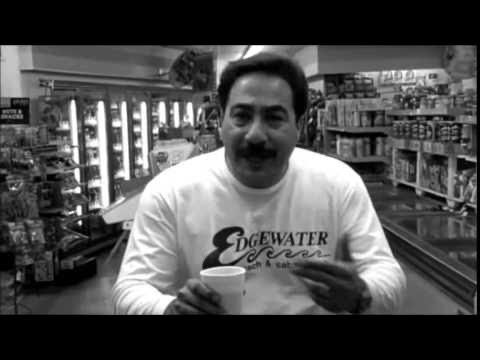
There is a scene in Clerks that gets funnier every single year.
Not because the joke changed.
But because reality surrendered.
Dante Hicks is standing behind the counter, spiritually deteriorating under fluorescent lights, ranting about the endless parade of deeply confusing human beings he has been forced to interact with during his shift at the Quick Stop.
For context I graduated high school in 1993.
In 1994, Kevin Smith drops one of the greatest throwaway lines in 90s cinema:
“You mean I have to drink this coffee hot?!”
At the time, the joke worked because the customer sounded like a complete lunatic.
Of course coffee was hot.
That was the whole point.
Coffee was not a milkshake.
Coffee was not an accessory.
Coffee was not a personality.
Coffee was not “an experience.”
Coffee was not served with cold foam, rainbow syrup, oat milk harvested under a full moon, and enough sugar to reboot a hummingbird’s heart.
Coffee was hot bean bitterness for exhausted adults.
It was office fuel.
Truck stop fuel.
It was gen-x slacker fuel.
“Trying not to get fired” fuel.
And Kevin Smith captured that exact cultural moment perfectly.
That is one of the reasons I will always love his work.
His movies were funny, yes.
But they were also deeply observant.
People who did not grow up during that era sometimes miss what Smith was actually documenting.
Clerks was not merely a comedy about weird retail customers.
It was a black and white fossil record of pre-digital America.
You can almost smell the cigarettes through the screen. (& maybe some shoe polish?)
You can hear the humming coolers.
You can feel the sticky tile floor.
You can sense the weird little ecosystem that existed before every human interaction got flattened into apps and algorithms.
Every convenience store back then had its own cast of recurring NPCs.
The old guy buying the same newspaper every morning.
The chain smoker debating lottery numbers like military strategy.
The teenager renting the same VHS tape every weekend.(where I fit in)
The person who somehow turns purchasing milk into a hostage negotiation.
And if you worked retail in the 90s, Clerks did NOT feel exaggerated.
It felt suspiciously accurate.
That is what made it so powerfully relatable.
Smith captured an essence of the time that modern digital culture does not always understand anymore:
local texture. Back then, weirdness was regional.
Human. Specific. (*nods to WaWa fam, especially if you are from Philly!)
Now everybody online is arguing with the same five algorithmically amplified strangers while drinking beverages that sound like a liquid side quest.
But here is where the story becomes genuinely fascinating.
Because that coffee joke accidentally captured the exact moment before the world changed.
Clerks released in 1994.
And the timing matters.
Because the customer asking for cold coffee was not just a joke.
He was an omen.
The entire beverage timeline was already quietly mutating beneath American culture.
And once you see it, you cannot unsee it.
Here is the actual chronology.
Coffee had technically existed cold for decades.
There were iced coffee recipes in America going back generations.
Diners sometimes served chilled coffee drinks.
Certain regions had versions of coffee milk or sweet iced coffee.
But culturally?
Coffee still meant HOT.
That was the default assumption.
Then California happened.
In 1987, Coffee Bean & Tea Leaf created the “Ice Blended.”
This is important because it was one of the first commercially successful attempts to turn coffee into something dessert-adjacent instead of strictly functional.
Not “morning fuel.”
Not “adult bitterness ritual.”
A treat.
Then came Coffee Connection in Massachusetts.
In the early 1990s they created the original Frappuccino concept.
And this is where history quietly changes direction.
Because in 1994, the exact same year Clerks released, Starbucks purchased Coffee Connection and acquired the rights to the Frappuccino.
Now notice how weirdly perfect this overlap is.
On one side:
Kevin Smith accidentally documenting the final years of old-school American coffee assumptions.
On the other:
Starbucks preparing to industrialize an entirely new form of coffee culture.
Then came the impact event.
1995 Starbucks launches the Frappuccino nationally.
And suddenly coffee stops being merely coffee.
It becomes:
cold,
sweet,
portable,
customizable,
dessert-like,
youth-oriented,
identity-driven.
This was the rupture point.
This is the moment the old world begins collapsing.
Because before this shift, coffee culture largely belonged to:
diners,
construction workers,
offices,
truck stops,
parents,
night shifts,
smokers,
writers,
people trying to survive Tuesday.
After the Frappuccino?
Coffee culture starts becoming:
hangouts,
mall culture,
teenagers,
branding,
self-expression,
consumer identity,
“little treats.”
And then Starbucks commits the finishing move.
1996
Bottled Frappuccinos.
This is the true crossing of the Rubicon.
Because now cold coffee escapes the café.
Now it invades:
gas stations,
school vending machines,
grocery stores,
mall refrigerators,
suburban road trips,
office break rooms.
This is when the weird customer from Clerks wins history. The guy Dante mocked?
The guy who did not want hot coffee?
He was not insane.
He was early.
And the funniest part is that younger audiences today may not even fully understand why the original joke was funny anymore.
Because now the assumption has reversed.
Today if somebody under 25 hears:
“You mean I have to drink this coffee hot?”
they might honestly respond:
“…well yeah, why WOULD I want it hot?”
The absurdity signal flipped polarity.
The joke itself became historical evidence of a vanished cultural expectation.
And honestly?
That is kind of beautiful.
Because great art accidentally preserves assumptions nobody realizes are temporary.
That is why Clerks still matters.
Kevin Smith documented the exact texture of a transitional America:
before smartphones,
before social media,
before algorithmic monoculture,
before every store became interchangeable,
before coffee became a customizable milkshake operating system.
And hidden inside a stupid little convenience store rant was one of the funniest accidental acts of foreshadowing in modern pop culture.
Dante Hicks was standing at the shoreline of a cultural tsunami.
And behind him, just beyond the horizon, the Frappuccino was already coming.
The blender blades were spinning.
The whipped cream was gathering.
The age of iced bean dessert beverages had begun.
And none of us were prepared.
So, as I write this and sip on an iced coffee working a Memorial Day sales at a furniture store, I sip into the sounds of finality and a quick caffeinated rush;
I thank my favorite writer/director for lowering my body temperature in this late spring heat. 🧋


Comments